Echoes of Dallas
To walk through Dallas in 1888 is to witness a city on the cusp of transformation. It is a city of contradictions: dusty streets and gleaming ambition, hardship and optimism, the past’s memory and the promise of the future.
It is a city defined by the resilience of its people, the determination to rise from fire and frontier, and the willingness to embrace change while honoring the land and traditions that birthed it. Every brick, every handshake, every train whistle, and every bustling market contributes to a larger story—a story still being written with ambition, sweat, and vision.
In 1888, Dallas is alive, breathing, and becoming. It is a city that refuses to remain small or stagnant, and as the night falls and lamps flicker across Main Street, you can almost hear the city whisper its own promise: we will endure, we will grow, and we will rise.
Main Street Awakens
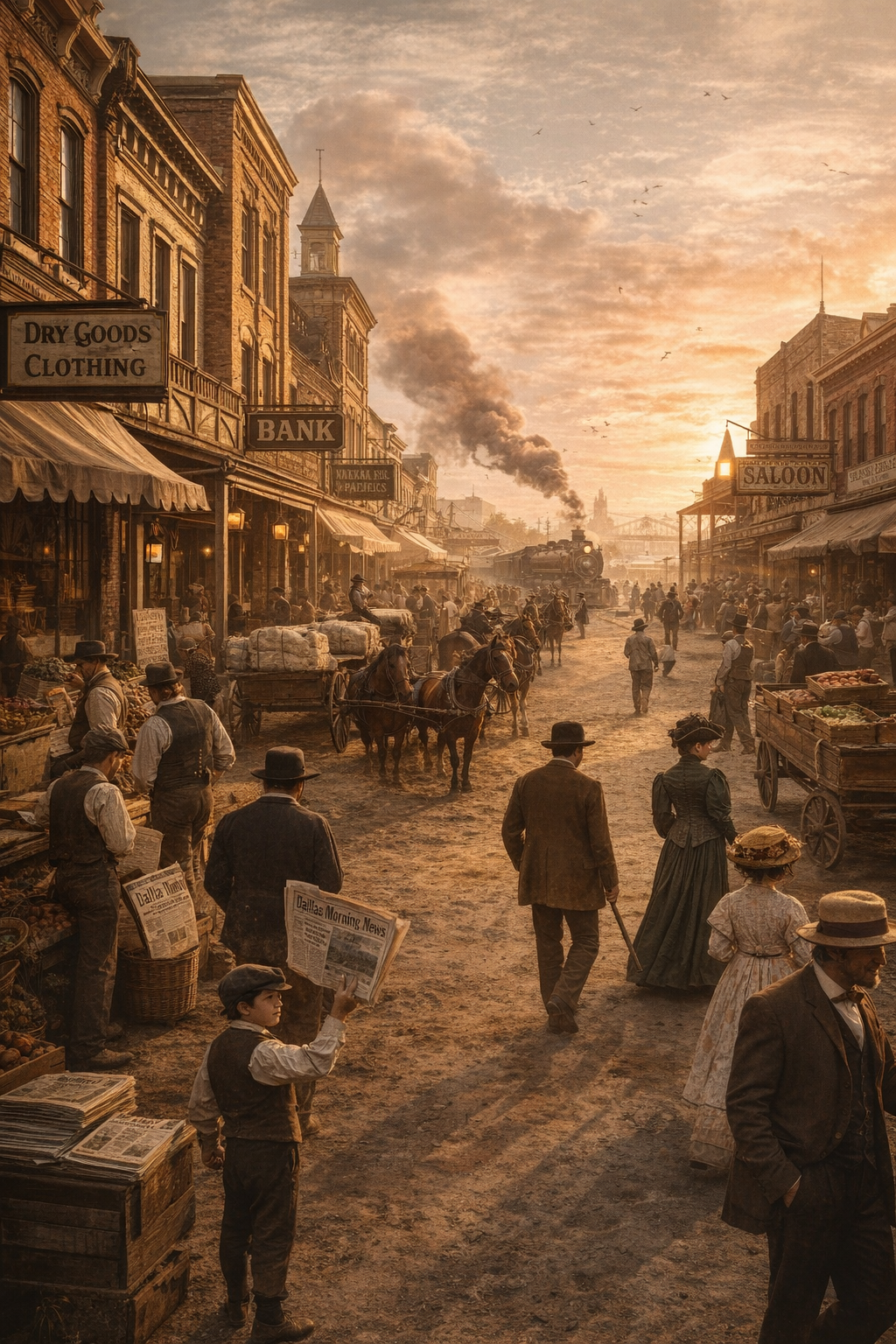
You step onto Main Street, the wooden boardwalk creaking beneath your boots. The street is a tapestry of activity: merchants sweep dust from storefronts, vendors arrange fresh produce in crates, and children dart between wagons with gleeful abandon. Painted signs above the shops advertise dry goods, clothing, hardware, and imported luxuries, each storefront striving to convey stability and success.
Men in tailored jackets tip their hats at passersby, and women in long dresses and bonnets carry baskets of bread or sewing supplies.
The scent of fresh bread mingles with the earthy aroma of dust and the faint tang of horse manure. Every face tells a story of ambition: some arrive with wealth and social standing, others with nothing but hope and determination. In Dallas, every person contributes to the city’s unfolding narrative.
The Railroad: Dallas’ Lifeline
Drawn by the rhythmic clatter of steel wheels, you make your way toward the rail depot. The sound grows louder, more insistent. Steam hisses from the Texas and Pacific Railway locomotive, its massive black engine exhaling clouds of smoke that drift lazily into the morning air. Workers scurry across the yard, unloading crates, rolling cotton bales, and shouting instructions over the din. Nearby, a train bearing the banner of the Atchison, Topeka and Santa Fe Railway waits patiently, bringing travelers from distant towns and cities.
The railroad is more than a mode of transport; it is the lifeblood of Dallas. Each train carries goods, people, and ideas that link the city to the rest of the country. Cotton, grain, and manufactured goods flow in and out, creating an economic pulse that drives commerce, banking, and social life. Every whistle announces opportunity, and every arrival reshapes the city’s character.
Cotton and Commerce
Dallas’ wealth in 1888 comes largely from cotton, the soft white crop that dominates the economy. Near the rail lines, warehouses overflow with bales stacked high, their surfaces dusted with the residue of recent travel. Farmers from surrounding counties arrive by wagon, negotiating prices with merchants who seem as skilled in numbers as they are in reading the weather and the market.
Cotton is more than a crop—it is a language. Every bale represents hours of labor in the fields, months of growth, and the promise of profit. Banks close by safeguard the resulting wealth, their sturdy brick facades and iron doors a testament to Dallas’ growing financial confidence.
The city’s residents are keenly aware of the stakes, and the hum of commerce creates a rhythm that reverberates through streets, offices, and homes alike.
Rebuilding and Resilience
As you continue along Main Street, the city’s resilience becomes evident. In 1880, a devastating fire consumed much of the business district, leaving ashes where ambition once stood. Today, brick and stone buildings line the street, rising proudly from foundations that have been carefully reconstructed.
Masons work diligently on new structures, laying each brick with precision, embedding in them both skill and the promise of permanence.
The city’s architecture reflects a hard-earned confidence: this Dallas will not be erased by fire or fortune. It is a city learning to assert itself, one building at a time.
Daily Life and Fashion
Walking past the shops and offices, you notice the variety of daily life. Children laugh and chase each other along the sidewalks, their energy undimmed by the dust and heat. Shopkeepers arrange goods and greet customers with practiced politeness, balancing efficiency with warmth.
Fashion reflects both practicality and social aspiration. Men wear jackets and hats, often carrying canes or satchels, their attire signaling respectability and intention. Women wear long dresses with fitted bodices, often adorned with delicate lace or embroidery. Bonnets shield faces from the sun, while gloves and handkerchiefs complete the ensemble. Even in a city still emerging from its frontier roots, appearances matter—they convey status, respect, and the desire to belong to a growing community.
The Pulse of News and Ideas
No visit to Dallas in 1888 would be complete without a glance at its intellectual life. The The Dallas Morning News, founded just three years earlier, has already become a vital conduit of information. Its pages record business deals, social events, political debates, and international news, binding the city’s residents to each other and the wider world.
Newspapers are passed from hand to hand on Main Street. You see a young boy calling out headlines, eager to sell the morning edition. Citizens pause to read or discuss stories, demonstrating that even in a city still defined by physical labor and commerce, ideas are a currency of their own.
Midday Heat and Commerce
By midday, the Texas sun asserts its authority. The streets grow hotter, and a thin layer of dust rises from the packed dirt roads with every step. Wagons creak under the weight of goods, and merchants shout offers while negotiating with customers. The air smells faintly of smoke, hay, and the earthy perfume of freshly harvested produce.
Inside stores and offices, ceiling fans turn slowly, moving warm air in languid circles. Conversations cover the practical and the aspirational: business deals, news from distant relatives, political discourse, and the occasional debate about the city’s future.
Dallas is alive with both energy and ambition, every citizen a participant in a shared experiment of growth and civilization.
Leisure Along the Trinity
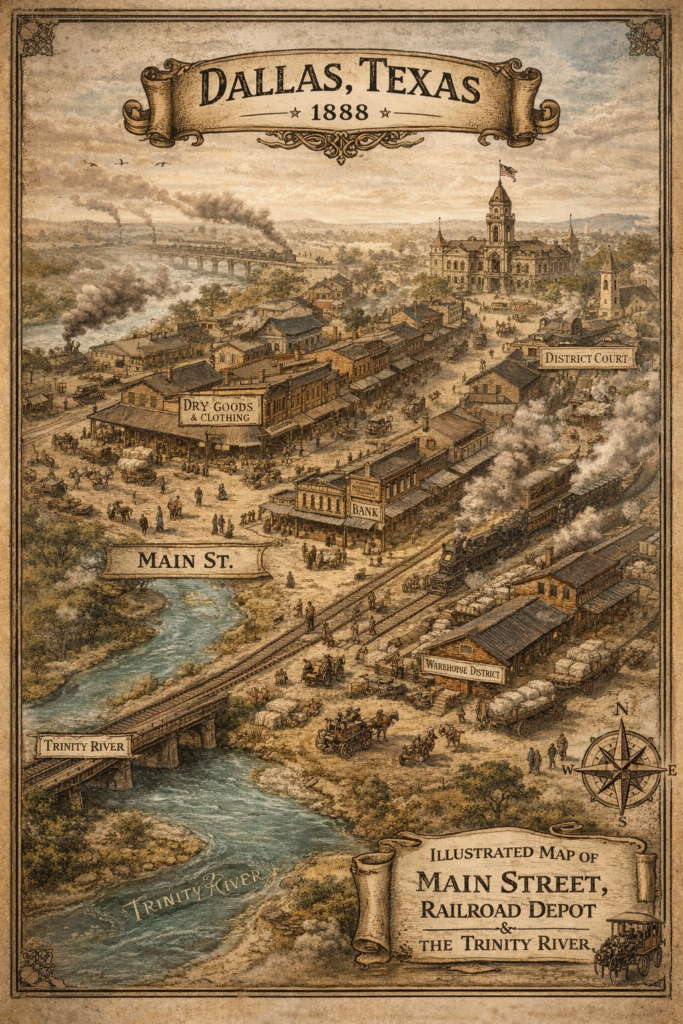
Seeking respite, you wander toward the Trinity River. Its gentle waters provide both sustenance and reflection, a natural counterpoint to the city’s relentless activity. Workers pause along its banks, resting from the heat, washing tools, or letting animals drink. Horses’ hooves sink slightly in the damp soil, leaving impressions that will be quickly filled again by the tide of daily life.
The river reminds residents of their vulnerability and resilience. Floods and droughts are ever-present threats, yet the city persists, learning to thrive despite—or perhaps because of—the unpredictability of nature.
Social Gatherings and Community Life
Evening brings Dallas’ residents together in new ways. Churches host gatherings, saloons offer spaces for conversation and respite, and small theaters or halls welcome performances. Music floats along the streets as families stroll, neighbors exchange news, and friendships form over shared experiences.
Meals are often communal events, highlighting the city’s cultural intersections. Families gather around hearty stews, roasted meats, fresh bread, and seasonal vegetables, often accompanied by imported goods or delicacies that signal both wealth and cosmopolitan taste. Hospitality is valued, and visitors quickly sense the pride citizens take in sharing their city.
Sunset and Reflection
As the sun sinks low, the city casts long shadows, and oil lamps flicker to life, painting warm pools of light on brick facades and wooden sidewalks. The steam of departing trains lingers in the cooling air, merging with the smoke of chimneys and the subtle scent of evening.
People linger on streets and porches, reluctant to retreat indoors. Conversations are animated yet relaxed; the pace has slowed, but energy remains. Dallas rests but does not sleep. Plans are whispered, deals finalized, and dreams quietly nurtured for tomorrow.
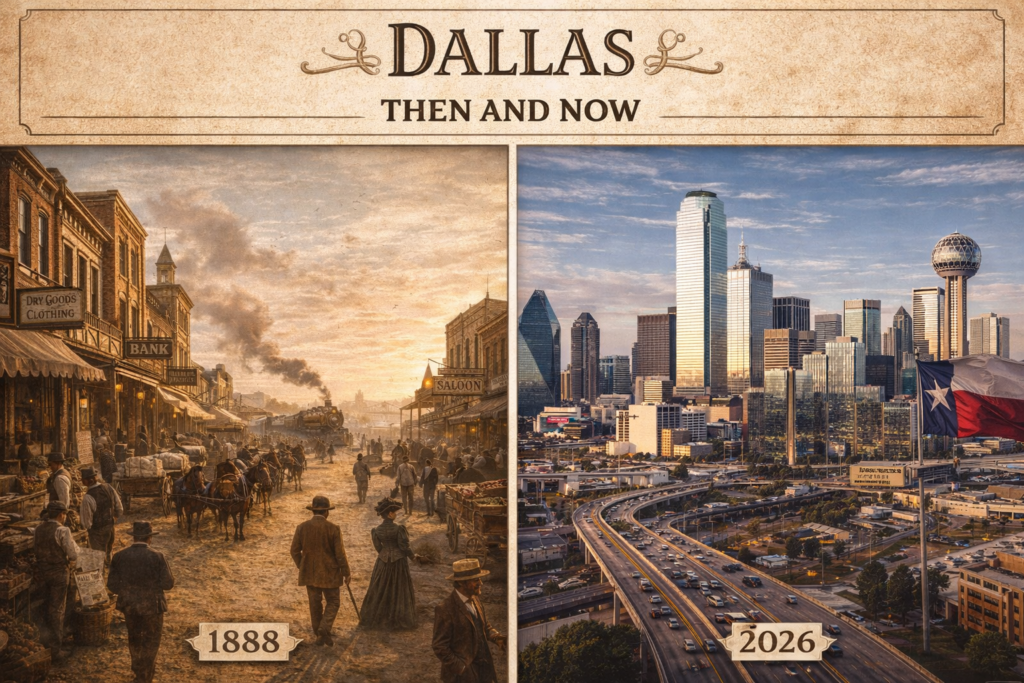
Dallas Today (2026): A Modern American Powerhouse
Population & Growth
- Dallas has a population of about 1,337,417 people in 2026, with steady annual growth continuing from previous years. (World Population Review)
- The median age is around 33 years, reflecting a relatively young and dynamic urban populace. (World Population Review)
Skyline, Development & Urban Life
- Downtown Dallas has increasingly shifted toward mixed-use and residential living, with old office spaces being converted into apartments and hotels — shaping a livelier, 24/7 city center rather than a strictly corporate district. (Dallas News)
- Major building projects continue citywide, including hotel growth, convention center expansion, and transit enhancements, signaling Dallas’ long-term transformation as a vibrant metropolitan hub. (Forbes)
Economy & Business Growth
- Dallas is emerging as a leading U.S. financial center, rivaling traditional hubs like Charlotte — attracting banks, corporate headquarters, and investment growth thanks to business-friendly policies and a strategic central location. (Axios)
- Major companies continue expanding in the region, such as Public Storage relocating its corporate headquarters to the Dallas‑area suburb of Frisco, reflecting the broader North Texas business boom. (Chron)
Transportation & Infrastructure
- Dallas Fort Worth International Airport (DFW) is undergoing an over $800 million expansion, including a major new terminal and upgraded transit connections, reinforcing its role as one of the busiest airports in the world. (Chron)
Culture & Global Events
- Dallas will be a key host city for the 2026 FIFA World Cup, with numerous matches, fan festivals, and an International Broadcast Center bringing global attention to the city. (Diario AS)
- The city also supports a lively cultural calendar — including events like the Dallas International Film Festival showcasing international cinema and drawing global creatives. (Wikipedia)
Tourism & Lifestyle
- Dallas was ranked among the top travel destinations for 2026 by major publications, in part due to world‑class sporting events and thriving cultural scenes. (Yahoo)
- Tourism contributes billions to the local economy, supporting tens of thousands of jobs and bolstering local businesses across diverse neighborhoods. (The Dallas Examiner)
- Upscale venues like a new Delilah Dallas supper club are expanding the city’s nightlife and dining options, blending local Southern flair with global inspiration. (Chron)
Sports & Entertainment
- Dallas continues to be a vibrant sports city — hosting major leagues and events, including the Dallas Open tennis tournament, rising soccer culture with FC Dallas (MLS), and expanded uses of venues like AT&T Stadium for NHL and other marquee games. (Wikipedia)
- The area also embraces esports and entertainment at venues like the Credit Union of Texas Event Center, marking Dallas’ participation in modern competitive gaming and fan culture. (Wikipedia)
Challenges & Urban Change
- Like many growing cities, Dallas faces ongoing challenges — from balancing regional sprawl and transit infrastructure to maintaining affordability as demand increases. (Reddit)
- Local civic initiatives like Project Texas 2026 aim to strengthen education, healthcare, and economic innovation to support long‑term quality of life for residents. (Project Texas)
In Summary: Dallas in 2026
Dallas in 2026 is a multifaceted city — bridging its history with 21st‑century growth, global sports prominence, cultural vibrancy, and economic clout. With expanding infrastructure and a booming tourism and business environment, it’s a city that’s both deeply local and increasingly global — a place that, like in 1888, continues to define its own story with ambition and resilience.